
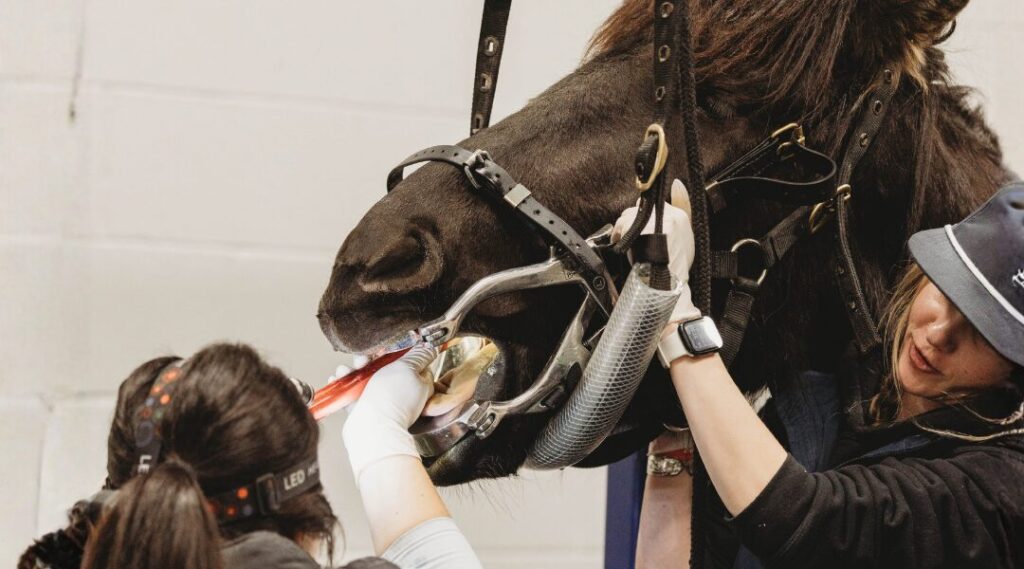
A horse can be dropping feed, resisting the bit, tossing its head, losing performance, or even developing nasal discharge — and many owners still wouldn’t immediately think, “dental pain.”
That’s because horses are remarkably good at hiding discomfort. As prey animals, they’re wired to mask pain for as long as possible, which means significant dental disease can quietly develop long before obvious symptoms appear. According to equine veterinarian Dr. Blaire Varnes, that’s exactly why routine dental care is so important.
“There’s actually a huge spectrum of signs that can indicate dental pain,” Dr. Varnes explained.
Some of the more recognizable symptoms include dropping feed, chewing abnormally, or leaving behind partially chewed balls of hay known as “quids.” More advanced problems can present as facial swelling, oral swelling, or foul-smelling nasal discharge — a particularly concerning sign that may point to tooth root infection or severe dental disease.
But many horses never show dramatic outward signs at all.
In fact, some horses continue eating normally and maintaining weight despite experiencing severe oral pain. Dr. Varnes recalled one especially memorable case involving a 12-year-old Mustang that appeared outwardly healthy and even overweight. The owners assumed the horse didn’t need regular dentistry because he was eating well. But during the oral exam, they discovered massive hooks on the teeth that had grown so aggressively they were embedding into the bone of the jaw.
“He was clearly in pain,” she said. “But because horses — especially Mustangs — are so stoic, he never really showed it.”
That hidden pain can impact far more than comfort alone.
Dental disease can interfere with a horse’s ability to properly grind forage, which directly affects digestion and nutrient absorption. In performance horses, oral pain may also contribute to resistance under saddle, difficulty accepting the bit, jaw discomfort, or unwillingness to carry the head comfortably in certain positions.
And contrary to some common beliefs, Dr. Varnes says properly fitted bits should not be damaging the teeth. If significant bit-related trauma is visible in the mouth, it may point to issues with fit or usage rather than normal wear.
Dental needs also change significantly throughout a horse’s life.
Young horses between the ages of two and five undergo major dental changes as baby teeth erupt and shed. During this time, regular exams are especially important to monitor sharp points, retained caps, and proper tooth eruption. Older horses, on the other hand, often face entirely different challenges — including aging teeth that begin to “expire,” creating uneven wear patterns and difficulty chewing effectively.
For most horses, Dr. Varnes recommends at least annual sedated dental exams, with some younger or more complex cases benefiting from evaluations every six months.
Advancements in equine dentistry have also dramatically improved both diagnosis and treatment. Modern imaging, improved dental equipment, sedation protocols, and advanced tools like oral endoscopy and CT imaging are helping veterinarians identify issues earlier and treat horses more comfortably than ever before.
Perhaps the biggest shift, though, is philosophical.
Years ago, many horse owners only addressed dental care once a horse was visibly struggling. Today, the focus has shifted toward prevention — identifying problems before they become severe enough for the horse to finally show pain.
Because when it comes to dental disease, silence doesn’t always mean comfort.
This post has been approved by Dr. Blaire Varnes